Autopoietic interactive creation
[…] the construction of social reality is also done through media. In our case it is the positioning that the media makes possible for the individual that “places” such person in a set of possibilities. This is where there is a big difference between linear and interactive documentaries. Interactive documentaries are relational artefacts that allow direct engagement with the reality that they portray […] (Gaudenzi 2013, p. 37)
For Sandra Gaudenzi, this possibility of direct engagement with the represented reality—and by extrapolation with the society in which it is situated—is the essential characteristic of any interactive documentary object. As a documentary filmmaker creating an interactive work, I understand that I must do more than engage the viewer emotionally or intellectually through an "engaging" work. Rather, I must engage the viewer directly in the unfolding and experiencing of the documentary representation in progress, and thus in and with the society from which it is extracted. As a researcher, I felt it would be interesting to carry out this interactive formatting using audiovisual material filmed with prior linear formatting objectives in mind. This allowed me to compare the creation of a linear work to the development of an interactive work, and to better understand the differences in creative investment required by the two processes.
In this chapter, I analyze the design and production stages of my interactive documentary object in order to account for the creative process as a whole. It may still seem paradoxical that after having proceeded in a precise and reflective manner through all the formatting stages of the documentary object, I was willing to leave the final stage of its completion in the hands of the spectator. Arnau Gifreu also questions what happens to the viewer's experience following this more or less partial relinquishing by the filmmaker of formal and experiential control over the documentary work:
In traditional documentaries, the author’s ability to influence the audience is taken for granted, and this influence is exercised through filming and the discursive structure coordinated via editing and staging. But, what happens when this ability is given, at least, partly, to the documentary audience? What happens when the audience is not only audience but the creator of their own documentary experience? (Gifreu 2011, p. 355)
From the beginning of this research work, my main objective has been to discover what happens to the audiovisual work and its creator when the latter yields to the *spect-actor* a significant part of their influence over the documentary experience as it unfolds. I undertook the production of my web documentary with the same objective. My research guided my creative choices and helped shape my interactive object. I will now examine each production stage, paying particular attention to the evolution of the documentary object and the nature of my involvement.
4.1 Ideation of the work in two stages
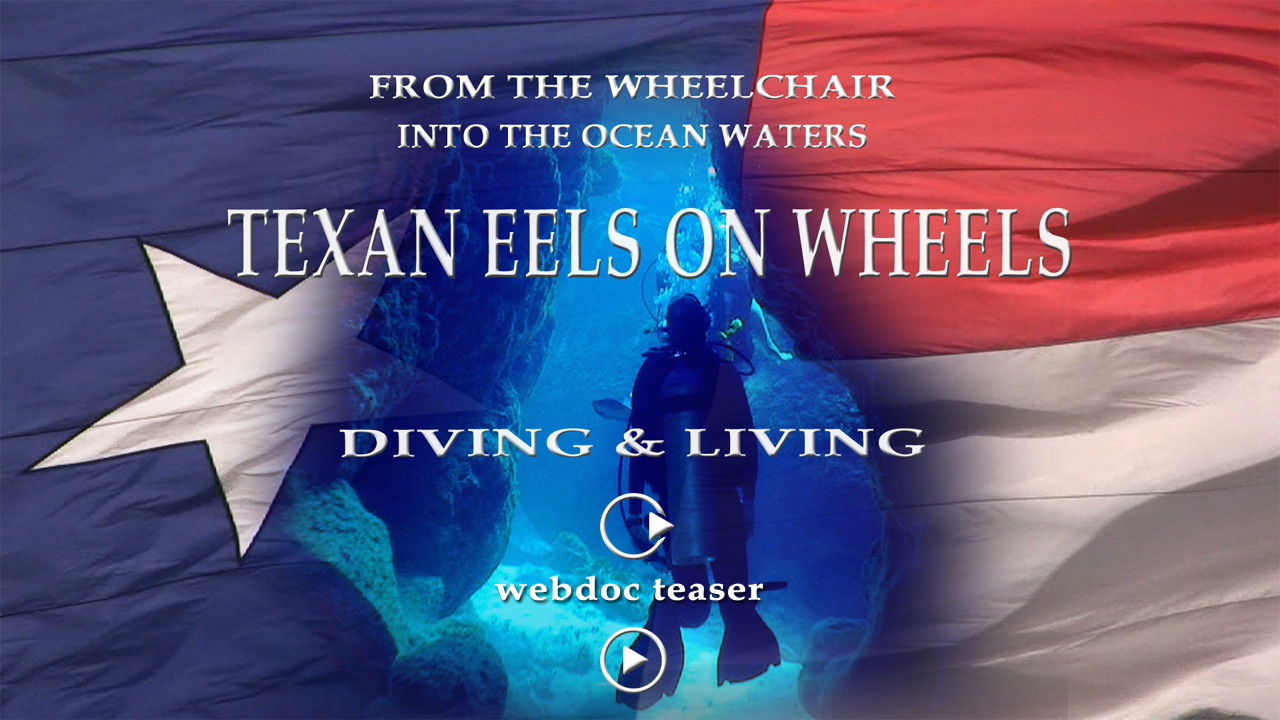
As I mentioned in the first chapter dedicated to some of my linear productions, the production of the film *Texan Eels on Wheels* was initiated by the experience of a friend who became a member of the diving organization for people with disabilities Eels on Wheels. Having just celebrated his 38th birthday, he confided in me that the cancer he had been battling for several years had damaged his spine. In the same breath, he announced that he was preparing a second diving trip to Belize with a group of divers with disabilities based in Austin. I felt at that moment that there was an inspiring life story to be told.
All the audiovisual productions in which I have participated in the past were initiated by similar stages of awareness and reflection. After being informed and touched by a social, human, or cultural issue, I would decide to reflect on it in order to express myself on the subject through the production of an audiovisual work. Regarding the film *Texan Eels on Wheels*, the initial creative emotions were: inspiration in the face of courage and empathy for the hardships faced. This subject also allowed me to address notions of human adaptability, family and community support, and friendship. Subsequently, the limited reception and distribution of the work prompted me to explore new ways of sharing the stories of these inspiring people. It was therefore with the same sense of respect and admiration for them that I approached the production of the interactive work *Texan Eels on Wheels*. Nevertheless, this time I had to return to my initial creative intentions and ignore the existence of the linear form and the disappointment felt at its poor reception. I had to consider the subject as it usually appears before it is formatted—that is, for what it is, what it says to me and what it can tell others, and how it can do so through the envisioned form, even an interactive, adaptable, and multiple one. In this case, however, I was starting from interviews and images that had already been filmed.
4.2 Production of the audiovisual components
Filming took place in three main stages: a first diving trip to Bonaire, another to Belize, and finally a series of interviews in Texas and California. Before departure, I took an intensive PADI certification course in the University of Montreal swimming pool. Having already an idea of my communication intentions, it was important that I be able to witness these underwater activities and be responsible for documenting them. My primary filming interest during this first trip was twofold. On one hand, I was inspired by people with disabilities engaging in a complex, potentially perilous sporting activity far more confidently than most of us would. On the other, I was interested in these assistants of diverse abilities and varied expertise—dive masters, nurses, physiotherapists, etc.—who support the divers with disabilities and share with them the pleasure of this demanding sport.
Handling the camera proved to be very easy, as diving allows for an almost instinctive movement of the body in three-dimensional space. However, the lighting conditions and variable transparency of the water made the use of zoom and long focal lengths ill-advised. Over the course of the filming days, I realized it was more effective to use the widest focal length possible and to film in automatic aperture and focus modes. I established the framing by positioning myself as close as possible to the subjects, while being careful not to affect the enjoyment of their dive.
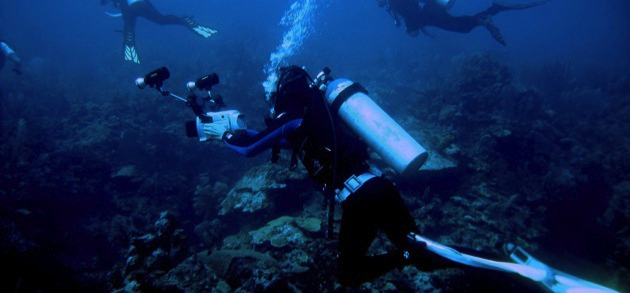
Figure 10: Gilles Tassé in Belize for the filming of the film *Texan Eels on Wheels*.
(photo: John Turkel)
As a filmmaker and documentary cameraman, I have always minimized the influence of my presence on the unfolding of the events I was documenting. However, during this shoot, I was not only a participant in the events in progress, but I was also responsible for a task that was sometimes incompatible with the fulfillment of my production work. Indeed, diving is performed in pairs—and with three divers when accompanying a person with reduced mobility—so that there is always someone capable and available in case of need. I was the partner of my colleague and friend John Turkel. During one of our first dives, I forgot this important responsibility. I followed a massive turquoise eel for about ten minutes and filmed a long *plan séquence*. At the end of filming this shot, I realized that I had abandoned my partner and strayed from the group of divers. These specific filming conditions sometimes made my work as a filmmaker more difficult. Being directly concerned and involved in the events in progress, I lost the usual distance necessary for the smooth running of a shoot.
Six months later, I went diving in Belize with the same organization, accompanied by additional divers. I wanted to make a second trip to meet other potential subjects and shoot new underwater footage. This time I was better prepared technically and knew a bit more about what I wanted (and what I was doing). However, from the beginning of this trip, my friend and colleague from Los Angeles became very ill. I assisted him to the best of my ability, and I dived less, and consequently filmed little.
During the few months preceding the shoot in Texas, I planned the next steps for my project. I decided to focus the narrative on the people with disabilities—and leave out the other members of the group—as their life stories were rich and sufficient in themselves for the development of a satisfying narrative. I asked about ten disabled divers to participate in the production of the film and received six positive responses, as some divers preferred not to share their private lives on camera.
The Texan subjects lived quite far from each other, from Dallas to San Antonio. Since they had become my friends over the course of the trips and dives, they all offered me hospitality during the few days I visited them. Thus, I was able to get to know them better and properly prepare the interviews, and I filmed sequences of their daily lives during leisure and work activities. Once again, I was filming alone. I filmed the interviews using a fixed frame in order to remain intellectually and emotionally available during the conversation.
Throughout my career as a filmmaker, I have worked as a director, director of photography, and editor. I always conceive my films based on each of the production stages they necessitate and with full knowledge of the technical and organizational requirements they require. Each stage builds on those that preceded it and is established according to those that will follow. However, regarding this interactive work, the video documentation was carried out before I envisioned the creation of an interactive work and its distribution on the Internet. It was therefore only at the final multi-stage phase (Web and interactive) that the production process was able to partially free itself from its linear heritage and finally be conceived in its interactive form. It is probable that I would have filmed the interviews differently had I known in advance that they were to be used in the creation of an interactive work viewed on a computer or on various mobile viewing and interaction devices—tighter framing for interviews, subjects addressing the camera directly, etc. But since the audiovisual material is already shot, let us return briefly to the content of the video tapes to better understand the choices subsequently made in the construction of the interactive work.
4.3 Media Assets
There are first six interviews of approximately 60 minutes each featuring two women and four men confronted with a dramatic event that left them disabled. Lynette Kunz, from Harker Heights, is a singer and theater actress. Joseph Murphy, from Austin, is a dental surgeon. Patricia Parnell, from Pflugerville, is an IT analyst at Dell. Neil Peltier, from Helotes, is an operational supervisor at SeaWorld San Antonio. Don Rorschach, from Irving, is a retired lawyer and dog advocate. John Turkel, from Los Angeles, is an information technology consultant.
Each of them testifies to those moments when they had to demonstrate qualities of courage and will, allowing them both to overcome these demanding ordeals and to live a fully satisfying and engaged life. For each of them, there are also, to varying degrees, video sequences of various activities—work, leisure, cooking, etc.—with family or friends. Finally, there are sequences of travel and diving, including the different stages of transport by plane and boat, festive moments of camaraderie, and dive preparation. I witnessed the courage of these disabled divers who allow themselves to be thrown overboard with their heavy and cumbersome equipment while they are sometimes completely physically helpless. They demonstrate great confidence in their abilities, as reduced as they may seem, and in those of their companions, who are always by their side.
4.4 Development of a Formulation and Interaction Design
Before the stage of formatting the interactive documentary object, I participated in two short workshops exploring the web documentary led by the researcher Sandra Gaudenzi (cited several times in this thesis) which took place at Concordia University in Montreal in March 2015. Sandra Gaudenzi emphasized the particular creative process of these interactive works, which require their creators to first and foremost understand the expectations of their future users. She urged us to put ourselves in their shoes and offer them what they want, what they need. As a filmmaker involved in the production of an interactive work, it was at this moment that I understood it was about doing much more than what I used to do at the editing stage of a linear work where, receiving the work in progress, I judged its potential reception by the spectator. The interactive documentary work places the user at the center of its apparatus (*dispositif*). This seems obvious. But it involves a fundamental paradigm shift for a filmmaker engaged in the creation of a new object. It involves fundamentally accepting that the interactive work only exists at the very moment of its actual experimentation.
Janet Murray highlights this particular media creation mandate even more clearly. According to her, an interactive audiovisual experience will be satisfying for the spectator to the extent that it can offer a tangible result to the actions they undertake:
When the things we do bring tangible results, we experience the second characteristic delight of electronic environments – the sense of agency. Agency is the satisfying power to take meaningful action and see the results of our decisions and choices. (Murray 1997, p. 126)
Opening the chapter, Sandra Gaudenzi explained how the interactive work offers the *spect-actor* an engagement in the unfolding of the experimentation of a certain representation of reality and, by analogy, a direct relationship to the society from which it is extracted. These conclusions align with my own communication intentions and allowed me to better understand the reflexive mechanics of these interactive works. As for Janet Murray, she prompts me to consider the shaping of the interactive object even more concretely by informing me about the narrative mechanics of the interactive process and the degree of satisfaction of the experimentation and interaction process, which is fulfilled through clear actions followed by concrete results.
During my first graduate university session, I designed a prototype of my interactive object using rudimentary digital tools. My intention was to initiate a reflection on interactivity and to test some of my intuitions regarding interaction and navigation. I retained a few navigation and interactivity ideas from this first experiment for the creation of the new interactive object. I notably kept the navigation via content category icons that I had developed from public domain icons, which I sometimes modified. At the time, I had established about twenty content categories such as personal care, work, travel, healing, support, question, home, etc., based on the themes emerging from the interview content.
Figure 11: Examples of category icons for the Texan Eels on Wheels prototype
(in order: Accident, Difficulties, Personnal Care and Food). Icons designed by Lorc. CC BY 3.0. Online http://game-icons.net/. Accessed June 23, 2015.
I appreciate these icons as they are easy to understand and perceive. Their graphic simplicity allows them to be easily inserted into the screen space without cluttering the *spect-actor's* field of vision or distracting them while they are engaged in the unfolding of audiovisual content.
During the experimentation of this first interactive documentary sketch, I was confronted with certain limitations of web hosting, as audiovisual playback stops often interrupted this much-sought-after engagement from the spectator. Following this observation, it appeared more efficient and responsible to place my video assets on a hosting and broadcasting site specifically designed for this task, such as Vimeo, Google, YouTube, Yahoo, etc. However, before choosing the video file hosting best suited to my needs, I had to consider the method I was going to use to embed interactivity into the documentary work.
The HTML5 language allows for the manual insertion of interactivity tags (markers) when encoding a website containing interactive videos. Although manual encoding (HTML5, JavaScript, and CSS) is relatively efficient for programming and structuring interactive events, writing it quickly becomes tedious and restrictive as screen position adjustments and synchronization must be applied to the various events. Several platforms are available to perform this formatting and encoding. Each in their own way, they allow for different possibilities in constructing interactive offerings, such as active social media windows, a questionnaire appearing at a specific moment of viewing, a link to another video, etc. My choice settled on Klynt, a platform that is more difficult to master but allows for more interactive possibilities as well as greater precision in the implementation of the interaction offering.
Following this choice of interactivity construction platform, I was able to decide on the hosting mode for the video files. The "education" version of Klynt that I used allows for referencing videos hosted on YouTube, or directly to the address of their viewing (and hosting) site. However, as I mentioned, few web hosts offer a video viewing speed capable of meeting the requirements of an interactive audiovisual work. YouTube, for its part, allows for a download speed compatible with interactive viewing and video resolution and compression qualities consistent with my audiovisual quality requirements. I therefore uploaded the videos to YouTube and designated them as unlisted (and not private) so they could be referenced during the HTML5 encoding of the website.
At this point in my analysis, it seems relevant to briefly recall the stages completed during the production process in order to clearly understand the remainder of the journey and the important choices that remain to be made.
4.5 Summary
First, I evaluated the narrative and informational quality of the documentary audiovisual assets. Then, I defined the main communication intention of the interactive work and determined in a general way the type of icon-based navigation I wished to offer. I also thoroughly researched the engaging nature of these interactive documentary works (Gaudenzi 2013, p. 37) and how they must be constructed to involve the *spect-actor* in a satisfying way (Murray 1997, p. 126). Finally, I chose the digital, web, and interactive tools necessary for the remainder of the creative process. The creative process was thus unfolding according to my forecasts, step by step, without major technical problems or moments of disillusionment. However, a few important points still remained to be clarified before beginning the shaping of the object.
When, as a filmmaker, I perform the editing of a (linear) film, I build a sequence around an action or a testimony. I look at the available shots, evaluating their aesthetic quality and their narrative and informational relevance. Throughout the editing process, I react to the narrative construction in progress and am able to validate my choices by observing their effectiveness during a viewing conducted at the editing station. However, during the construction of an interactive work, the possibilities for metadata, navigation, and interaction are virtually infinite. As a creator, I therefore had to establish the experimental quality of the interactive documentary object in production, based on what seemed necessary and effective for understanding the available information and for the reflection I wished to provoke. To do this, I returned to the video tapes I had filmed in order to "immerse" myself once again in the subject and in my initial communicative impulse. Upon viewing the first sequences, I immediately rediscovered the courage of these inspiring people and their moving zest for life. This is what "my user needs" (as per Sandra Gaudenzi). And it is therefore this message that I decided to communicate, primarily to those who have suffered a trauma that has disabled them, as well as the loved ones who accompany them. They must come to terms with a dramatic change in their lives and need support, advice, and encouragement.
Similarly, my understanding of this new multitasking spectator and the conclusions I drew regarding the reflective devices of the interactive works in which I participated (*Be Now Here* and *Portable Portraits*) influenced me in the development of this new interactive form. Supported by these two poles of reflection, I agreed that it would be more effective to establish categories of information and audiovisual navigation relating to the most important information points of the interviews, thus avoiding overloading the *spect-actor* with navigational information. I also wanted the *spect-actor* to be able to follow a particular character, or a category of information, and change the audiovisual flow along the way in order to deepen one subject or another depending on the interest of the moment. To do this, I decided that thematic icons for path flow choices would allow the *spect-actor* to act quickly and orient the remainder of their experimentation. Finally, after having defined this interactive and navigational quality to be given to the interactive documentary object, I felt ready to begin the formatting of my web documentary.
4.6 Formatting
I first created six main categories of discourse allowing for the containment and grouping of the majority of documented testimonies and the essentials of the remarks collected. I established the following categories: *Injury* – *Healing* – *Support* – *Home* – *Work* – *Diving*. I ordered these categories more or less arbitrarily, starting with the traumatic incident followed by the activities that succeeded one another according to the healing and rehabilitation process that took place.
Figure 12: Category icons for *Texan Eels on Wheels*
(in order: *Injury*, *Healing*, *Support*, *Home*, *Work* and *Diving*).
Icons designed by Lorc. CC BY 3.0. Online http://game-icons.net/. Accessed June 23, 2015.
By selecting six categories, I limited the number of icons to learn (and to recognize on screen during a viewing) and I established a numerical symmetry between the characters and the subjects treated. This allowed me to develop a simple and systematic navigational interface that could be intuitively and rapidly mastered by the *spect-actor*. Certain categories join or overlap, following the discourse of one of the characters. And the value of a statement will take on a different orientation when placed in parallel with the remarks of another speaker. With each viewing, the variable juxtaposition of testimonies will multiply the meaning that can be given to them by the *spect-actor*.
Following these choices of thematic categories, I created informative video segments using the "one-on-one" interviews conducted with the subjects and limited their average duration to approximately 2 minutes. I desired a short and more or less systematic duration for the videos, in order to allow for a rapid familiarization, even habituation, with the experimental process. I also wanted to take into account this new audiovisual spectatorship of the current viewer, which resembles the episodic and punctual act of reading (Odin 2012, p. 159). Thus, I responded simultaneously to the multitasking nature of the *spect-actor* and predisposed them to more easily apprehend future experiments. I also had to choose the order of presentation for the characters on screen. Some people are more demonstrative and emotional, while others reveal themselves to be more discreet or analytical. I decided to place the characters according to their degree of engagement. Starting with the most engaging personality, I established the following order: Lynette, Neil, Joe, John, Patricia, and Don. This may seem futile or even whimsical, but I also took into account the musical quality of the first names. I could just as well have placed John before Joe, but the sound of the names John and Don respond to each other and sound better to my ear in this distribution.
This more or less arbitrary and subjective organization of first names and themes facilitated the construction process of the interactive object. I remembered this organization easily and was thus able to progress more systematically and rapidly through the flow of thousands of digital gestures and manipulations to be performed, without fear of forgetting an element or placing it in the wrong spot.
Injury Healing Support Home Work Diving
Lynette
Neil
Joe
John
Patricia
Don
Figure 12: Character/category audiovisual grid for Texan Eels on Wheels
As we can see in the audiovisual grid above, the audiovisual assets are composed of 36 character/category pairings. Furthermore, for each character there are portrait segments, which are more free-form and personal, in which we see them in their daily lives, at work, at home, and with their family or friends.
4.7 Media Interaction Design
Generally speaking, and for any interactive object, interactivity is first initiated by an offer of participation and exchange through the interface of the audiovisual object. Subsequently, the process only takes shape when the offer is accepted by the spect-actor, followed by an act of engagement on their part. The welcoming "screen surface" (Di Crosta 2010, p. 156) of my interactive documentary object—this invitation to interaction—therefore had to be "attractive" and provide a glimpse of the audiovisual and interactive experience to come.
I have mentioned on several occasions the attitude I adopt during editing—the final stage of shaping a linear work—where I shift from creator (during my editing actions) to that of spectator (when I judge the effectiveness of my work through viewing). An interactive work, for its part, is received through an act of engagement, following a desire to see and to do. As a creator of interactive work, I therefore put myself in the place of the spect-actor receiving an offer of interaction and certain possibilities for action.
I wanted to frame and limit the navigational possibilities of the interactive and audiovisual device—which could a priori be unlimited—so that it would be easier for my future spect-actor to grasp. I thought at length about the best way to approach the exploration of these themes and characters. I hesitated to allow, from the outset, an equivalent bilateral exploration between these two poles (themes, characters) of complementary exploration. Ultimately, I agreed that the primary anchoring of the audiovisual material resided with the characters, and I therefore made them the point of entry for the interactive offer.
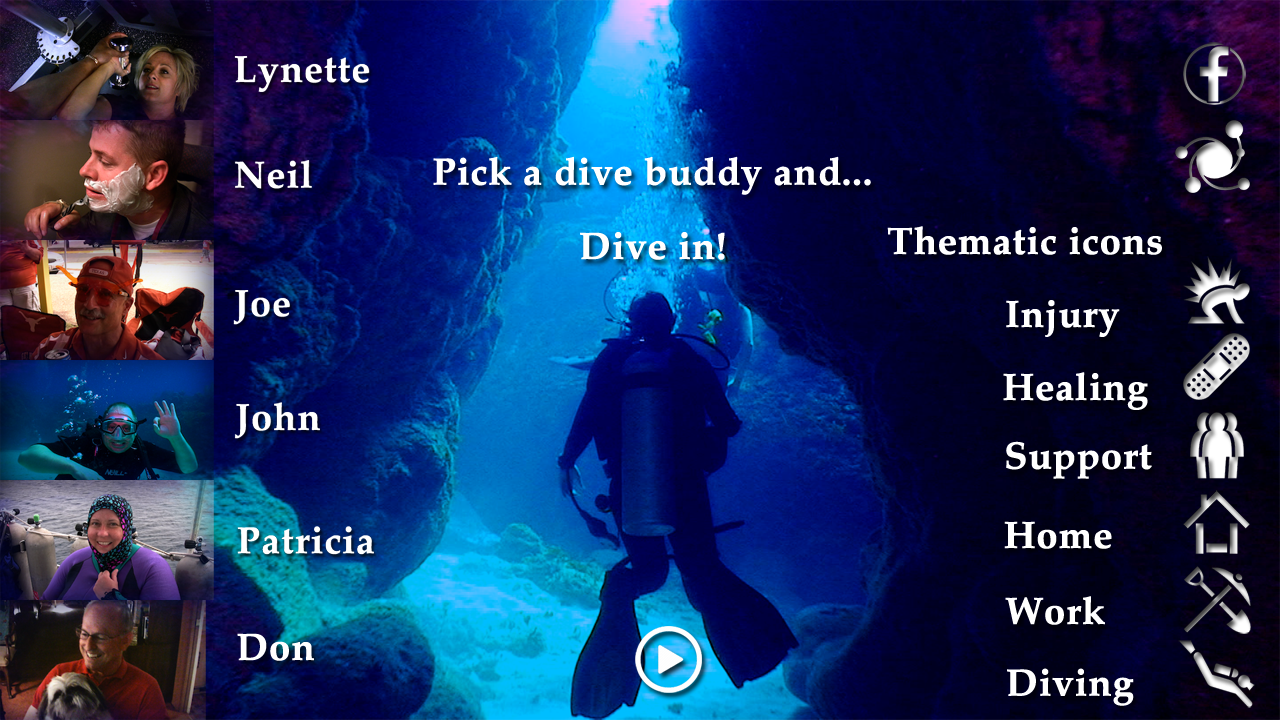
Figure 13: Welcome screen of the interactive work Texan Eels on Wheels.
http://www.texaneelsonwheels.com/#TexanEelsonWheels (photography and graphic design: Gilles Tassé)
Right from the start, the spect-actor must therefore act and choose one of the characters with whom they wish to engage by viewing their video portrait. Once involved in viewing this narrative and descriptive segment, they can decide to meet another person—and view another portrait—or continue with the same character and hear them speak on one of the themes offered for navigation and exploration. The spect-actor can leave the current audiovisual flow at any time and go either toward another character testifying about the same subject or, conversely, continue with the character with whom they are engaged and go into any of the other categories. For example, if the spect-actor is engaged in the segment where Lynette discusses her work (*work*), they can "jump" along the way to another thematic segment of her testimony—the injury that left her disabled (*injury*), her healing (*healing*), etc.—or conversely, go listen to one of her diving partners (any one of them) continue the discussion started on work (*work*).
Figure 14: Star configuration of character/theme links for Texan Eels on Wheels
The 36 character/theme video segments thus each offer links to ten other character/theme segments—the same person speaking on the five other themes, the same theme discussed by the five other people—amounting to a total of 360 navigable links. Furthermore, in order to maximize the efficiency of the interface and make the experience even more interactive and open, the spect-actor can click on the icon representing the theme currently being viewed and consult one of the sites external to the web documentary *Texan Eels on Wheels* that I have identified as conducive to the ongoing reflection. These sites will reveal their content to the spect-actor as they explore and learn the interface. I have assigned hyperlinks for each of the 6 categories presented in order to open the discussion to other spaces of reflection concerned with issues related to spinal cord trauma: government agency, support group, rehabilitation center, etc. Similarly, I established a hyperlink for each of the 6 characters. When viewing a portrait, the spect-actor can click on the name of the person being revealed and access an external site containing additional information. Each character has a specific hyperlink; Myspace, LinkedIn, journal article, company site etc. As we can see, the combinations are multiple and provide the spect-actor with just as many avenues for reflection.
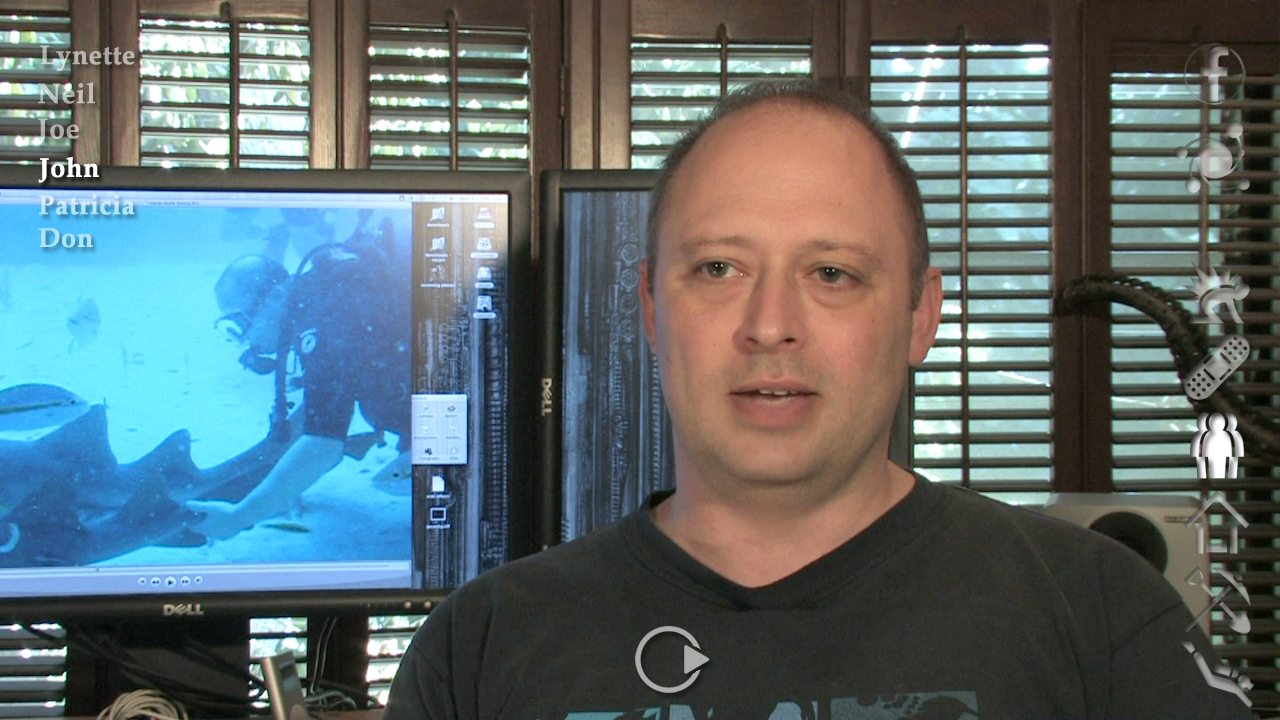
Figure 15: Video navigation interface – Interview John/Support, in *Texan Eels on Wheels*.
http://www.texaneelsonwheels.com/#JohnSupport (photography and graphic design: Gilles Tassé)
Klynt (the interactive construction software) offered great flexibility in the construction and visual and temporal placement of markers for interactive possibility. To define the structure of the interface, I returned to my primary communication objective in order to guide my choices for graphic and interactive constructions. My primary intention has always been to encourage reflexive and active listening from the spect-actor. Consequently, I decided that the interface would remain invariable and constant throughout the viewing and interaction experience in order to support the spect-actor's reflection by predispoing them to assume this particular dual responsibility of listening and decision-making, which is indispensable to this reflection. My task as a creator of an interactive documentary object was therefore to support the spect-actor in this journey—cognitive and reflexive—by offering a clear discourse and graphic signaling that allows for the awareness of possibilities to change the narrative and informational flow without distracting them from their process of listening and reflection.
4.8 Social Interface Implementation
From the very first drafts of the project, I wanted the spect-actor to be able to access a chat-type communication space and a place for sharing videos and hyperlinks, in order to deepen the discussion and reflection sparked by our object. This interactive device was intended to participate in the reflection process by allowing both the addition of additional information and the possibility of discussing and exchanging based on this information. I had to modify some of my initial intentions regarding the development of an internal solution for the object after reflecting once more on the most effective way to achieve my communication objectives. Considering that the diving group Eels on Wheels reaches its members using the social networking site Facebook, and that a large number of people are also active on this network, I decided to use this framework of exchange and the predisposition for communication it can generate to my advantage. Thus, the multitasking, and sometimes hyperactive, spect-actor will be able to receive invitations for exchange and discussion from subscribers of the Facebook account for the web documentary *Texan Eels on Wheels*, while they are themselves engaged in their own Facebook account in other discussions unrelated to my object. The goal was to use an effective communication system already in place and simultaneously promote the reflection that could be initiated by my interactive documentary object. This possibility of reflection being the very essence of my approach, it matters little to me whether it finds its culmination elsewhere than in my object. I simply wished to collaborate in its possible existence.
With my interactive documentary object just completed, I discreetly put it online to test some of its components and verify the proper functioning of the many interactive choices it offers (more than a thousand). The various interactive and audiovisual devices function and respond well to interaction. However, the object does not quite exist yet, considering that it has not yet been truly experienced. The conclusion that follows shares my reflections as a documentarian engaged in the production of an interactive work distributed on the Web. I better understand the particular creative investment that this type of work requires and I am now better able to appreciate its different capacities for communication and reflection. I am, however, eager to discover my spect-actors, my new partners in discussion and reflection.